I'm a real chocoholic. Now I have to give it up.
So why me?
 Most of the time we love to feel special, but not so much when it comes to facial redness. It may not sound like much of a relief, but there is a proper scientific explanation as to why YOU may be currently suffering from this condition.
Facial redness may be caused by a condition called rosacea, which in turn is caused by specific physical occurrences that are happening in the skin of your face. Certain “triggers” can cause a flare-up or worsen the condition, and understanding what these are is the first step in solving the problem.
The good news is that when we know why something is happening, we are better equipped (with the expert help of our healthcare professionals), to figure out what to do about it.
So it’s worth taking some time to find out what you are dealing with. If you want to become more informed about the facts of facial redness, take a look at the following links:
The Basics: What is facial redness?
Let’s start by talking about what facial redness IS NOT. Ask any teenager to think about their parents kissing or catch sight of a tourist after a day on the beach and you will undoubtedly notice some very red faces. But let’s get one thing clear: these are not examples of ‘facial redness associated with rosacea.’
Facial redness associated with rosacea is actually a medical complaint. Rosacea is a chronic inflammatory skin condition that often begins as redness.
Facial redness is a symptom of a bona fide medical disease - something that you and your doctor have to take seriously.

The symptoms of rosacea can include:
- Flushing and persistent redness
- Visible blood vessels
- Stinging and burning
It is important to note that many causes of normal, everyday redness (from sun, cosmetics, exercise and so on) can also aggravate the symptoms of rosacea. Controlling these ‘triggers’ is an important part of treatment, to be followed alongside expert medical advice from a dermatologist or other healthcare professional.
And what about rosacea?
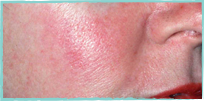
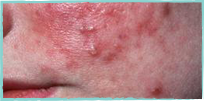
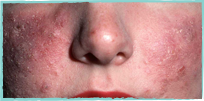
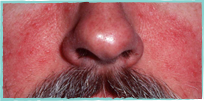
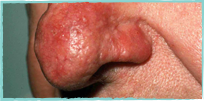
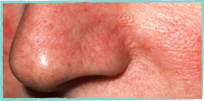
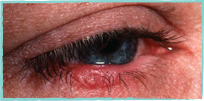


Well apart from being a difficult word to spell, rosacea (Ro-ZAY-sha) is defined as a chronic and inflammatory condition of facial skin.
There are four distinct types of rosacea, but typical signs and symptoms may include:
A tendency to blush or flush easily
Bumps or pimples on the face
Dry, tight, or itchy facial skin
A burning or stinging sensation in the face
Redness or thickening skin on the cheeks, nose, chin, or forehead
Small visible blood vessels on the face
Watery, bloodshot, or irritated eyes or swollen eyelids
Click on the icons below to find out more about the four types of rosacea:
Type 1
Facial Redness
Facial Redness:
the most common of the four, affecting over ¾ of people with rosacea.
Type 2
Bumps or pimples
Bumps (papules) or pimples (pustules):
these come and go and include red patches.
Type 3
Skin thickening
Skin thickening:
excess tissue often results in enlargement of the nose and irregular surface nodules (bump-like lesions). May occur in combination or after Types 1 and 2.
Type 4
Watery or bloodshot eyes
Watery or bloodshot eyes,
tearing and burning, swollen eyelids, recurrent styes.
So why does it happen?
You know what it feels like when you have a particularly bad attack of rosacea. That hot burning itch that starts in your stomach and rises to your face? The red bumps that suddenly seem to appear from nowhere?
It is pretty obvious what is happening outside your body. But what about inside?
For most people, feeling a red flush in their face after exercise or perhaps a brief moment of embarrassment is an entirely normal sensation. The flush is caused as blood rushes to the face, carried there by the blood vessels we all have under the surface of our skin.
However, for people with facial redness associated with rosacea, this rush of blood is increased. The blood vessels under the surface of the skin are not working quite as they should, and as a result too much blood rises to the top. We know what this leads to – more flushing, more redness, and more annoyance.
The good news is that there are medical treatments. Of course, treatments need to be discussed with a dermatologist or healthcare professional. Click here to find out how to talk to your doctor about possible solutions for you.
Am I making it worse?
While the facial redness of rosacea isn’t something that happens for no good reason, there are certain ‘triggers’ that can aggravate the condition and make life more difficult for sufferers. Understanding these is a key step in controlling your disease and leading a normal life. However avoiding these triggers can often be difficult, requiring large sacrifices:
I avoid meat and spicier food as much as I can. I’m almost a vegetarian these days.
I grew up in South Australia so we had the best wines. I used to like particularly old wines. Not any more.
 Click here to find out how to talk to your doctor about effective approaches to turn down the RED and turn up the YOU.